
JL Landworx Services
Shoreline Restoration
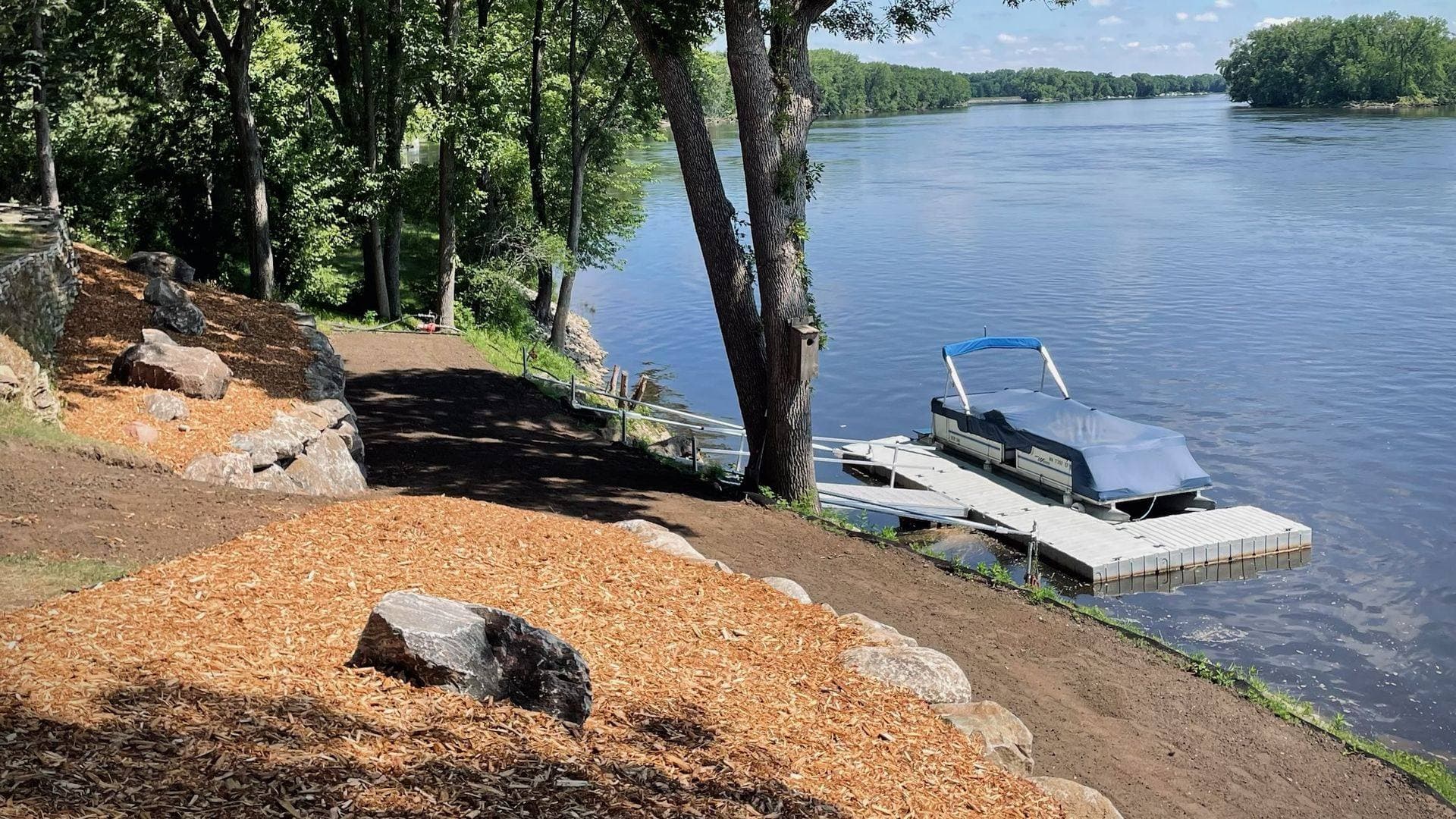
Shoreline restoration rebuilds an eroding lakeshore or pond edge — reshaping the bank to a stable slope, placing boulder or riprap stabilization where the design calls for it, and restoring usable access to the water.
Service overview
Shoreline Restoration for planned site work
Shoreline restoration is the work of rebuilding an eroding lakeshore or pond edge: reshaping the bank to a stable slope, placing boulder or riprap stabilization where the approved design calls for it, and grading the shoreline back into usable ground. JL Landworx performs this work for lakeshore homes, cabins, and pond-edge properties across Central Minnesota and the greater Twin Cities.
Most shorelines fail from more than one direction. Wave action and ice work on the bank from the water side while runoff from the yard cuts at it from above, and once the toe of the slope is undercut, the bank keeps slumping. The fix is rarely just placing rock at the waterline. The bank usually needs to be regraded to a slope that can hold, the toe needs support, disturbed soil needs stabilization, and the water coming down from above needs somewhere to go.
Shoreline work in Minnesota is commonly regulated. Depending on the parcel, a project may need review or permits from the DNR, the watershed district, or the county before work begins. JL Landworx does not determine or obtain those approvals — confirm requirements with the responsible authorities early, and expect the approved design to control what can be built at the water's edge.
Problems shoreline restoration solves
- A lakeshore bank is eroding and the yard is losing ground toward the water
- Wave action and ice have undercut the shoreline and left a raw, slumping bank
- A pond edge has washed out, grown over, or become too steep to maintain
- An old shoreline treatment — failing timbers, scattered rock, or a collapsed wall — needs to be removed and rebuilt
- Runoff from the yard, roof, or driveway is cutting channels down the bank
- The shoreline is too steep or unstable to reach the water safely
What we do
- Boulder and riprap placement for bank stabilization where the site and approvals allow
- Eroding bank regrading and reshaping to a stable, maintainable slope
- Excavation and removal of failed shoreline structures and slumped material
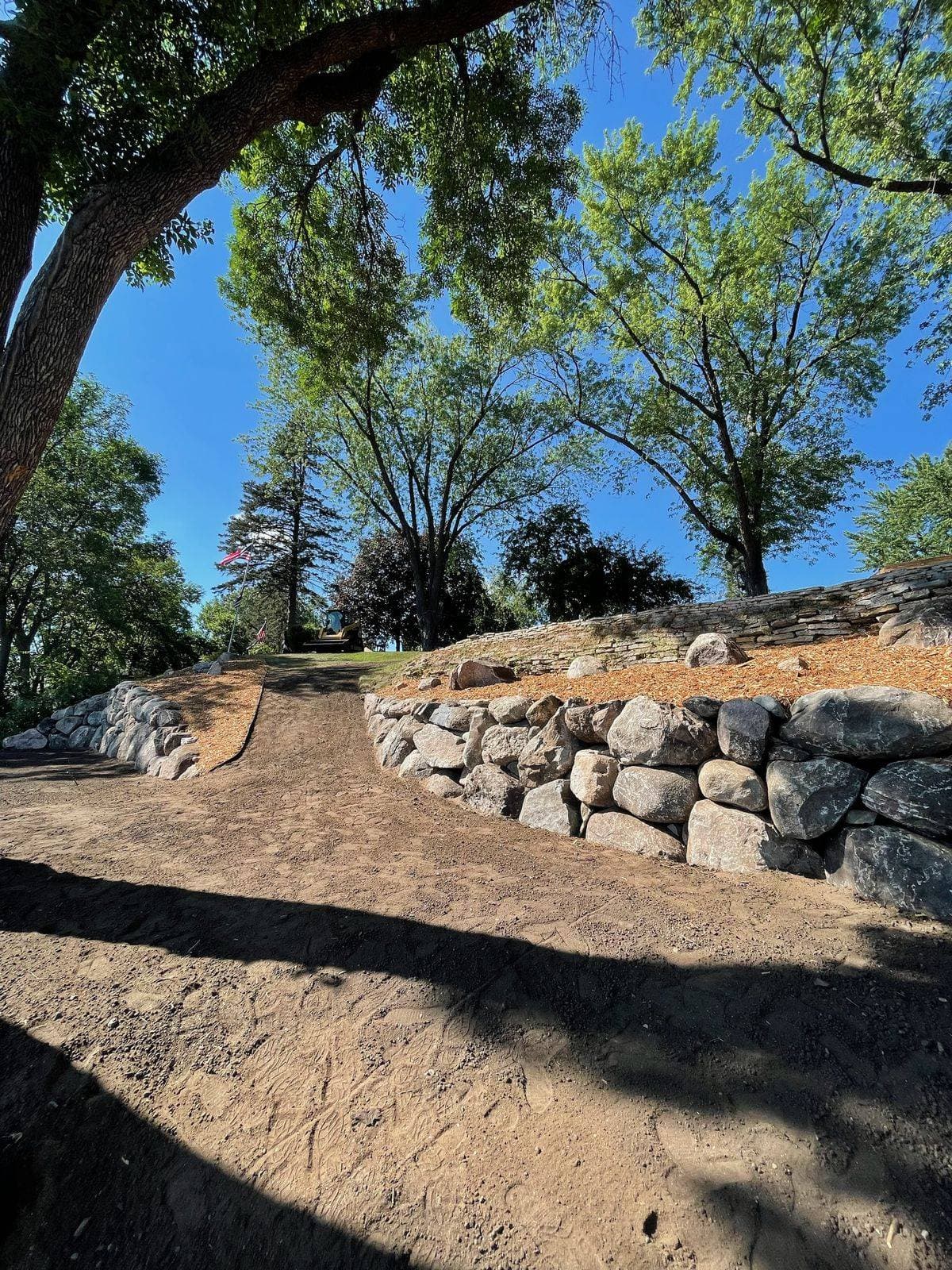
- Boulder wall construction above the waterline where a grade change needs to be held
- Pond-edge reshaping and restoration integrated with grading and drainage work
- Grade work for shoreline access — paths, landings, and equipment reach
- Erosion and sediment control during construction, including silt fence and inlet protection where needed
- Finish grading and stabilization of disturbed ground with seed, mulch, or erosion control blanket
From first conversation to handoff
Our shoreline restoration process
Shoreline review
We walk the bank with you to see what is failing and why — bank height and slope, soils, how water moves down and along the shoreline, what any previous treatment did, and how equipment can reach the water.
Plan and approvals
The scope is built around the site and the approved design. Where a permit or professional design applies, that documentation controls what gets built — confirm requirements with the DNR, watershed district, or county before work is scheduled.
Bank preparation
Failed materials and slumped soil are removed, and the bank is excavated and reshaped to the planned slope so the stabilization has something solid to bear against.
Stabilization placement
Boulder or riprap stabilization is placed per the design, from the toe of the slope up, with fabric and aggregate where the plan specifies them.
Finish grading and restoration
The upland bank is graded to direct runoff away from the raw slope, disturbed soil is stabilized with seed, mulch, or blanket, and temporary sediment controls come out once the ground holds.
Common projects
- Eroding lakeshore banks on residential and cabin lots
- Pond-edge reshaping and restoration on rural and residential properties
- Removal and rebuild of failed timber, block, or loose-rock shoreline treatments
- Steep lake lots needing regraded access to the water
- Boulder wall and tiered grade work above the shoreline
- Shoreline ground disturbed by construction that needs final grading and stabilization
Scope before machines move
Planning your project
What affects cost
- Length of shoreline and height of the bank being restored
- Amount of regrading and how much failed material must be removed and hauled off
- Stone type, size, and quantity the design calls for
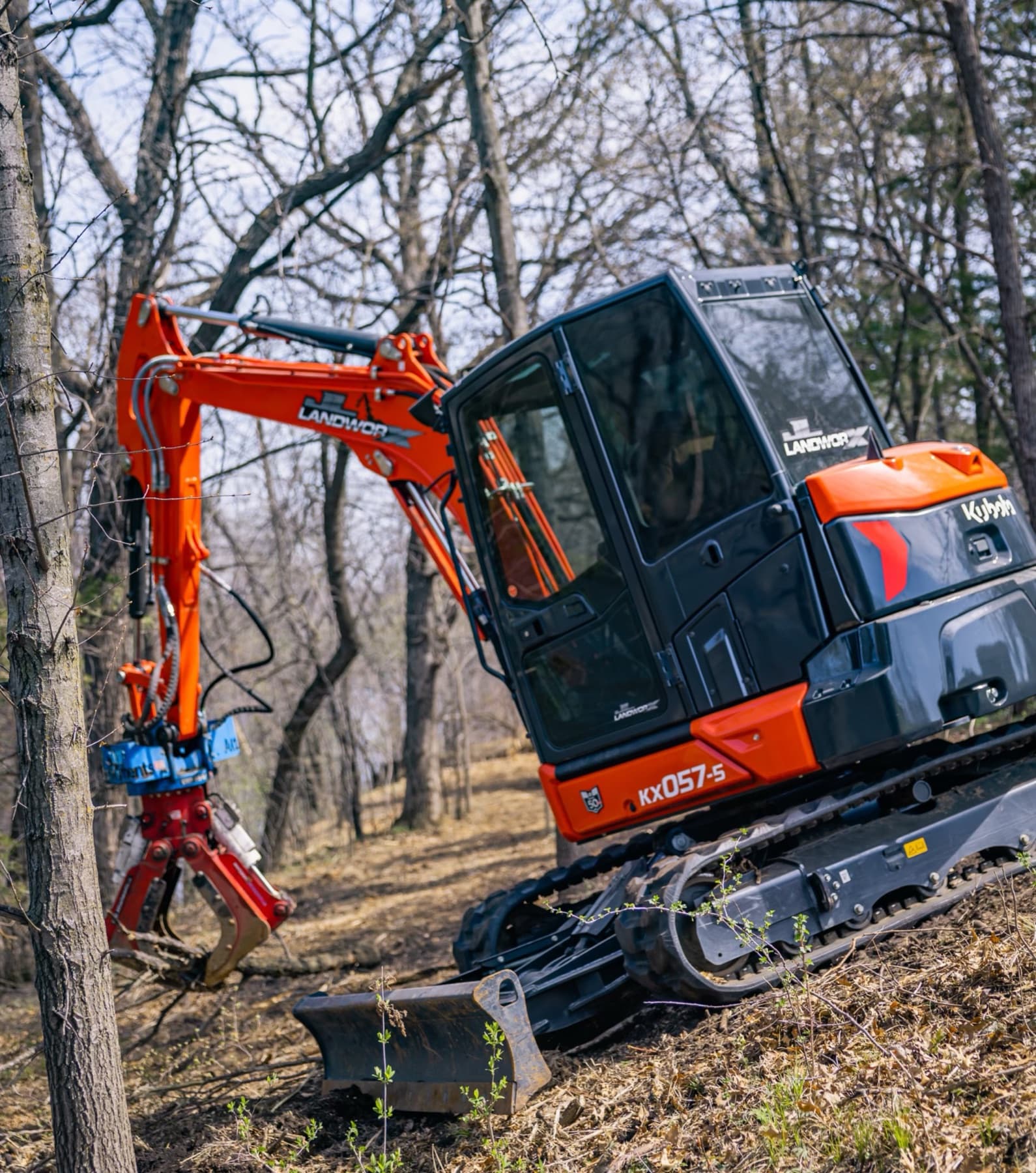
- Equipment access — tight lake lots and steep banks slow the work and can require smaller machines
- Erosion and sediment control measures required during construction
- Whether the approved design requires specific materials or professional design input
What affects timing
- Any approvals or design work that must be complete before equipment arrives
- Water levels and bank conditions — saturated or actively slumping banks slow the work
- Seasonal windows, since frozen ground, spring thaw, and wet weather all affect when a bank can be worked
- Stone availability and delivery scheduling
- Length and height of the shoreline being rebuilt
Good to know
- Shoreline work in Minnesota may require permits or review from the DNR, watershed district, or county — confirm what applies to your parcel before any work is scheduled.
- Deal with the water coming down the bank, not just the water hitting it — upland runoff carves shorelines from behind, so surface drainage above the bank is part of the fix.
- If a previous treatment failed, find out why before rebuilding — a failed wall or washed-out rock usually points to a bank or drainage problem the new work has to solve.
- Plan the equipment route early; how machines reach the water affects the yard, the trees, and the cost of the job.
- Decide how you want to use the shoreline — swimming access, a dock landing, or a natural bank — because it drives the slope, the stone, and the finish work.
Related services
Often paired with
Plan the next step
Shoreline Restoration resources
FAQ
Shoreline Restoration questions
Can you fix my eroding lakeshore?
Often, yes — but it starts with looking at the bank, not with a generic answer. Bank height, soils, water movement, access, and what any previous treatment did all shape the scope, and what can be built at the waterline depends on the approvals that apply to your parcel. We can review the shoreline and tell you what is practical from the construction side.
Do I need a permit for shoreline work in Minnesota?
Possibly — shoreline work is commonly regulated, and depending on the parcel it may involve the DNR, the watershed district, or the county. JL Landworx does not determine or obtain approvals. Confirm requirements with the responsible authorities before scheduling work, because the approved design controls what gets built.
Is riprap or a boulder wall better for my shoreline?
It depends on the bank, the site, and what is approved for your parcel. Riprap-style stone placement suits a sloped bank; a boulder wall suits a grade change that needs to be held, typically above the waterline. Neither is a universal answer, and on regulated shorelines the approved design makes the call. We can walk the bank and talk through what each would take to build.
When is the best time of year for shoreline work?
There is no single answer — it depends on water levels, bank conditions, and when any required approvals are in place. Saturated spring banks are slow to work, dry stretches make excavation and compaction easier, and frozen ground can help equipment access on some sites. We schedule around the conditions your bank actually presents.
Can you restore a pond edge the same way?
The construction work is similar — reshaping the edge, placing stone where the design calls for it, and stabilizing disturbed ground — and it pairs naturally with our pond excavation work. Ponds and their edges can still be subject to wetland or watershed rules even on private property, so confirm what applies before work begins.
Start with the site
Plan your shoreline restoration project
Tell JL Landworx what you need the site to support, where the work is located, and what must happen before or after shoreline restoration. We’ll review the scope and provide a project-specific quote and schedule.